How Probiotics Actually Work: A Pharmacist’s Breakdown
Every week, at least three people ask me: “Do probiotics actually work, or is it just marketing hype?”
It’s a fair question.
Walk into any health food shop, and you’ll find dozens of probiotic products, each claiming to be the “best” or “most advanced.”
The prices range from £10 to £60+. The CFU counts (colony-forming units) vary from 1 billion to 100 billion. Some need refrigeration, others don’t. Some have 5 strains, others have 30.
How do you know what actually works?
As a pharmacist who’s analyzed hundreds of clinical trials on probiotics, I’m going to explain exactly how these supplements work at the biological level, which strains have actual evidence behind them,
And how to avoid wasting money on products that look impressive but deliver nothing.
In this guide, you’ll learn:
- The precise mechanism of how probiotics colonize your gut
- Which bacterial strains have published human trials (and which are just filler)
- Why most probiotics fail before reaching your intestine
- The dosing strategies that maximize effectiveness
- How to match probiotic strains to specific health outcomes
This isn’t a list of product recommendations. This is the pharmaceutical science behind probiotics that supplement companies don’t explain.
What Probiotics Actually Are (And Aren’t)
The Official Definition
The World Health Organization defines probiotics as: “Live microorganisms that, when administered in adequate amounts, confer a health benefit on the host.”
Let’s break down what this means:
“Live microorganisms” = The bacteria must be alive when you consume them AND survive the journey to your gut. Dead bacteria don’t colonize.
“Adequate amounts” = Dosing matters. 1 billion CFUs of a well-researched strain can be effective. 50 billion CFUs of random, untested strains won’t do anything.
“Confer a health benefit” = The strain must have published evidence showing measurable outcomes in humans. Not petri dishes. Not mice. Humans.
“On the host” = You. Not someone else. Probiotics are surprisingly individualized.
What Probiotics Are NOT
They’re not permanent residents: Most probiotic strains are transient colonizers. They pass through your gut over 3-7 days, exerting effects while present, then get flushed out. This is why daily dosing is typically recommended.
They’re not one-size-fits-all: Your gut microbiome is as unique as your fingerprint. A probiotic that works brilliantly for your colleague might do nothing for you.
They’re not magic bullets: Probiotics work best as part of a comprehensive approach including diet, sleep, stress management, and prebiotic fiber intake.
They’re not all the same: The difference between Lactobacillus rhamnosus GG and Lactobacillus acidophilus LA-5 is as significant as the difference between penicillin and aspirin. Same genus, completely different effects.
The Biology: How Probiotics Work in Your Gut
Stage 1: Surviving the Stomach Acid Gauntlet
Your stomach is designed to kill microorganisms. The pH can drop to 1.5-2.0, strong enough to dissolve metal. Most bacteria die within minutes.
How probiotics survive:
Mechanism #1: Acid-Resistant Strains Certain bacterial species naturally produce protective compounds:
- Lactobacillus species produce lactic acid, creating a micro-environment that buffers pH changes
- Bifidobacterium species have specialized cell wall structures
- Spore-forming bacteria (Bacillus species) create protective endospores
Mechanism #2: Delayed-Release Capsules Pharmaceutical-grade enteric coating:
- Resists acid in the stomach (pH 1.5-3.0)
- Dissolves in the small intestine (pH 6.5-7.5)
- Increases bacterial survival by 10-100x
Mechanism #3: Food Buffering. Taking probiotics with food raises stomach pH temporarily:
- Empty stomach: pH ~2.0
- With food: pH ~4.0-5.0
- Survival rate increases dramatically
Research finding: A 2011 study in Beneficial Microbes showed that taking probiotics with a meal or 30 minutes before a meal improved bacterial survival by 40% compared to taking them on an empty stomach with water.
Stage 2: Navigating the Small Intestine
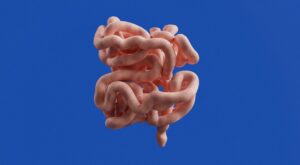
Once past the stomach, probiotics enter a 6-meter journey through your small intestine. This is where most nutrient absorption happens and where some probiotic strains exert their primary effects.
What happens here:
Bile Resistance: Your liver produces bile to digest fats. Bile salts also damage bacterial cell membranes. Effective probiotic strains have bile salt hydrolase enzymes that break down bile before it damages them.
Competitive Exclusion: Probiotics compete with pathogenic bacteria for:
- Adhesion sites on intestinal walls
- Nutrients (especially sugars and amino acids)
- Space in the mucus layer
Think of it like a game of musical chairs. If beneficial bacteria occupy the seats, pathogens have nowhere to sit.
Immune Modulation: This is where the magic happens. Probiotics interact with M cells (microfold cells) in Peyer’s patches specialized immune tissue in your small intestine.
The process:
- Probiotic bacteria produce metabolites (cell wall components, peptides)
- M cells sample these compounds
- Immune cells analyze: friend or foe?
- If recognized as beneficial, anti-inflammatory signals are sent
- If recognized as a threat: inflammatory response is activated
Evidence: Research in Nature Reviews Immunology (2023) showed that specific Lactobacillus strains reduce pro-inflammatory cytokines (IL-6, TNF-α) by up to 35% in people with gut inflammation.
Stage 3: Establishing in the Colon
The colon (large intestine) is where most of your gut bacteria live, trillions of them. This is the primary battleground for probiotic effectiveness.
Colonization vs. Transient Passage
Transient colonizers (most probiotics):
- Remain in the gut for 3-21 days
- Effects while present: metabolite production, immune signaling
- Require daily supplementation for sustained benefits
- Examples: Most Lactobacillus and Bifidobacterium strains
Persistent colonizers (rare):
- Can establish semi-permanent residence
- May remain for weeks to months after supplementation stops
- Examples: Saccharomyces boulardii, some spore-forming Bacillus species
The 6 Mechanisms of Probiotic Action
Beyond just “colonizing” your gut, probiotics work through multiple biological pathways:
Mechanism 1: Competitive Exclusion of Pathogens
How it works: Beneficial bacteria occupy ecological niches, preventing pathogenic bacteria from establishing.
Example: Lactobacillus rhamnosus GG produces antimicrobial substances called bacteriocins that specifically inhibit Clostridium difficile (C. diff) a dangerous hospital-acquired infection.
Clinical evidence: Meta-analysis of 31 trials (Cochrane Database, 2017) showed L. rhamnosus GG reduced antibiotic-associated diarrhea by 51% in children.
Mechanism 2: Production of Short-Chain Fatty Acids (SCFAs)
The process: Probiotic bacteria ferment prebiotic fiber → produce butyrate, propionate, acetate
Why SCFAs matter:
- Butyrate: Primary energy source for colon cells, reduces gut inflammation, strengthens intestinal barrier
- Propionate: Regulates appetite, improves insulin sensitivity, supports liver function
- Acetate: Crosses blood-brain barrier, influences appetite control
Key strains for SCFA production:
- Bifidobacterium longum
- Faecalibacterium prausnitzii (not yet available as supplement)
- Roseburia species (also not commercially available)
Professional tip: Most probiotic supplements don’t directly produce high levels of SCFAs. The real SCFA production comes from feeding your existing gut bacteria with prebiotic fiber. This is why I always recommend probiotics + prebiotics together.
Mechanism 3: Strengthening the Gut Barrier
The problem: Your intestinal lining is one cell layer thick. When this barrier becomes permeable (“leaky gut”), partially digested food particles and bacterial components enter your bloodstream, triggering systemic inflammation.
How probiotics help:
Tight Junction Enhancement: Probiotics upregulate proteins that seal the gaps between intestinal cells:
- Zonulin regulation (controls permeability)
- Occludin and claudin production (structural proteins)
Mucus Layer Reinforcement: Akkermansia muciniphila and Bifidobacterium species stimulate mucin production—the protective mucus layer coating your gut lining.
Evidence: Gut Microbes (2022) showed that 8 weeks of Bifidobacterium lactis supplementation reduced intestinal permeability markers by 28% in adults with metabolic syndrome.
Mechanism 4: Immune System Modulation
The balancing act: Your immune system needs to be aggressive enough to fight pathogens but calm enough not attack food or your own tissues.
How probiotics train your immune system:
Regulatory T Cell Production: Specific strains increase Tregs, immune cells that suppress excessive inflammation:
- Bifidobacterium infantis 35624
- Lactobacillus reuteri DSM 17938
- Lactobacillus plantarum 299v
Cytokine Balance: Probiotics shift the ratio of inflammatory to anti-inflammatory signaling molecules:
- Reduce: IL-6, TNF-α, IL-1β (inflammatory)
- Increase: IL-10, TGF-β (anti-inflammatory)
Clinical application: This mechanism is why probiotics show benefits in conditions like:
- Irritable bowel syndrome (IBS)
- Inflammatory bowel disease (IBD)
- Allergic conditions
- Autoimmune disorders
Mechanism 5: Neurotransmitter Production
The gut-brain axis connection:
Your gut bacteria produce the same neurotransmitters found in your brain:
GABA (gamma-aminobutyric acid):
- Produced by: Lactobacillus rhamnosus, Bifidobacterium dentium
- Function: Calming neurotransmitter, reduces anxiety
- Evidence: Reduces stress-related behaviors in both animal and human studies
Serotonin:
- 95% of your body’s serotonin is produced in your gut
- Precursor: Tryptophan from diet
- Gut bacteria influence the conversion pathway
Dopamine:
- Produced by: Bacillus species, some Lactobacillus strains
- Function: Motivation, reward, focus
Acetylcholine:
- Produced by: Lactobacillus plantarum
- Function: Memory, learning, muscle control
Research highlight: A 2016 study in Brain, Behavior, and Immunity showed that 4 weeks of Bifidobacterium longum1714 supplementation reduced perceived stress and improved memory performance in healthy adults.
Mechanism 6: Vitamin Synthesis
Certain probiotic strains produce vitamins your body can absorb:
Vitamin K2 (menaquinone):
- Produced by: Bacillus subtilis, some Lactobacillus strains
- Function: Bone health, cardiovascular protection
- Significance: Many people are deficient, especially if low vegetable intake
B Vitamins:
- B12 (cobalamin): Some Lactobacillus and Bifidobacterium strains
- B9 (folate): Lactobacillus plantarum, Streptococcus thermophilus
- B7 (biotin): Various Lactobacillus species
Evidence: Study in Nutrients (2020) showed that fermented foods containing Lactobacillus plantarum significantly increased folate bioavailability compared to non-fermented versions.
Strain-Specific Effects: Why Generic Probiotics Fail
Here’s the critical point most people miss: probiotics are strain-specific, not species-specific.
What this means:
Lactobacillus rhamnosus GG ≠ Lactobacillus rhamnosus LR-32 Bifidobacterium lactis BB-12 ≠ Bifidobacterium lactisHN019
Even bacteria from the same species can have completely different effects based on their specific strain designation (the letters/numbers after the species name).
Evidence-Based Probiotic Strains
Here are strains with robust human clinical trials:
For Antibiotic-Associated Diarrhea:
- Lactobacillus rhamnosus GG (10+ billion CFUs)
- Evidence: 63 trials, 51% reduction in antibiotic diarrhea
- Timing: Start with the first antibiotic dose, continue 1 week after
- Saccharomyces boulardii CNCM I-745 (5-10 billion CFUs)
- Evidence: 31 trials, especially effective for C. difficile prevention
- Advantage: It’s a yeast, not bacteria—antibiotics don’t kill it
For IBS (Irritable Bowel Syndrome):
- Bifidobacterium infantis 35624 (1 billion CFUs)
- Evidence: Reduces abdominal pain, bloating, and bowel movement irregularity
- Mechanism: Potent anti-inflammatory effects
- Lactobacillus plantarum 299v (10 billion CFUs)
- Evidence: A 12-week trial showed 78% improvement in IBS symptoms
- Particularly effective for gas and bloating
For Immune Function:
- Lactobacillus reuteri DSM 17938 (1-5 billion CFUs)
- Evidence: Reduces respiratory infections in children and adults
- Mechanism: Stimulates antimicrobial peptide production
- Lactobacillus paracasei CBA L74 (1 billion CFUs)
- Evidence: Reduces upper respiratory infection incidence by 30%
For Mental Health (Psychobiotics):
- Bifidobacterium longum 1714 (1 billion CFUs)
- Evidence: Reduces stress, improves memory under pressure
- Mechanism: Modulates cortisol response
- Lactobacillus helveticus R0052 + Bifidobacterium longum R0175
- Evidence: Reduces anxiety and depression scores in clinical trials
- Duration: 30 days minimum for effects
For Metabolic Health:
- Bifidobacterium lactis BB-12 (10 billion CFUs)
- Evidence: Improves insulin sensitivity, reduces inflammation
- Population: Most effective in adults 40+
- Lactobacillus gasseri BNR17 (10 billion CFUs)
- Evidence: Small but significant reduction in visceral fat
- Duration: 12 weeks for measurable effects
CFU Count: Does More = Better?
Short answer: No.
The nuance:
1 billion CFUs of a clinically-proven strain > 100 billion CFUs of random, untested strains
Why CFU counts can be misleading:
Problem #1: Survival Rates. If a product contains 50 billion CFUs but 99% die in your stomach acid, only 500 million actually reach your gut. A product with 10 billion CFUs in enteric-coated capsules delivers more viable bacteria.
Problem #2: Strain Quality Over Quantity Bifidobacterium infantis 35624 shows clinical benefits at just 1 billion CFUs because it’s a highly specific, well-researched strain. Random Bifidobacterium species at 20 billion CFUs might do nothing.
Problem #3: Manufacturing Variability Studies have shown that many probiotic products contain far fewer viable bacteria than claimed on the label—sometimes 10-100x less.
The sweet spot for most people:
- Single-strain products: 1-10 billion CFUs (if it’s a researched strain)
- Multi-strain products: 10-50 billion CFUs total
- Therapeutic protocols: 50-100 billion CFUs (short-term, specific conditions)
Why Most Probiotics Don’t Work
Reason #1: Wrong Strains The product contains generic bacteria without published human trials. They might be “good bacteria” theoretically, but with no evidence of actual health benefits.
Reason #2: Dead Bacteria Poor manufacturing, improper storage, or expired products. Many probiotics are dead before you consume them.
How to check:
- Look for “viable through expiration date” on label
- Check for third-party certification ( NSF, ConsumerLab)
- Refrigerated products generally more stable (though not always necessary)
Reason #3: Insufficient Dosing Product contains researched strains but at subtherapeutic doses. The clinical trials used 10 billion CFUs, but the product only contains 1 billion.
Reason #4: Missing Prebiotics Taking probiotics without prebiotics is like planting seeds without water. The bacteria need fiber to ferment and produce beneficial metabolites.
Reason #5: Poor Timing Taking probiotics at the wrong time reduces effectiveness:
- With very hot beverages (heat kills bacteria)
- With excessive alcohol (damages bacteria)
- Inconsistent timing (bacterial colonization benefits from routine)
Reason #6: Unrealistic Expectations Expecting immediate results. Most probiotic benefits require 2-8 weeks of consistent use. Some people give up after 1 week.
Reason #7: Individual Variability Your existing microbiome may not respond to that particular strain. This is why some people need to try 2-3 different products before finding what works.
Probiotic Dosing Strategies That Work
Strategy #1: The Foundation Approach
Who it’s for: Generally healthy people wanting to maintain gut health
Protocol:
- Multi-strain probiotic (5-15 strains)
- 10-25 billion CFUs total
- Taken daily with breakfast
- Combined with 10-15g prebiotic fiber
Duration: Ongoing (daily or 5 days per week)
Expected outcomes: Improved digestive regularity, stronger immune function, better stress resilience
Strategy #2: The Therapeutic Protocol
Who it’s for: Specific health conditions (IBS, post-antibiotic recovery, immune support)
Protocol:
- Single-strain or targeted multi-strain product
- Specific strain with clinical evidence for your condition
- Higher dose: 25-100 billion CFUs
- Taken 2x daily (morning and evening)
Duration: 8-12 weeks, then assess and potentially reduce to maintenance
Example: For IBS: Bifidobacterium infantis 35624, 1 billion CFUs, 2x daily for 8 weeks
Strategy #3: The Rotation Method
Who it’s for: Biohackers, people seeking maximum diversity
Protocol:
- Rotate between 3-4 different probiotic products
- Each product contains different strain combinations
- 1-2 months per product, then switch
Theory: Exposes your gut to wider bacterial diversity, prevents adaptation
Evidence: Limited clinical data, mostly theoretical benefits
Strategy #4: The Prebiotic-First Approach
Who it’s for: People who respond poorly to probiotics (bloating, gas)
Protocol:
- 2-4 weeks of prebiotics only (no probiotics)
- Gradually increase fiber: 5g → 10g → 15g daily
- After adaptation, introduce probiotics at a low dose
Why this works: Prepares your gut environment for bacterial colonization, reduces adverse effects
Special Populations: When Probiotics Require Caution
Immunocompromised Individuals
Risk: Live bacteria could potentially cause infection in severely immunocompromised people
Populations:
- Active chemotherapy patients
- HIV/AIDS with low CD4 counts
- Organ transplant recipients on immunosuppression
- Severe combined immunodeficiency
Recommendation: Consult your doctor before starting a probiotic regimen. Heat-killed (postbiotic) alternatives may be safer.
Critically Ill Patients
Risk: Bacterial translocation across the damaged gut barrier
Evidence: Mixed; some studies show benefits, others show potential harm in ICU patients
Recommendation: Only under medical supervision
Small Intestinal Bacterial Overgrowth (SIBO)
The paradox: SIBO involves too many bacteria in the small intestine. Adding more bacteria (probiotics) can worsen symptoms in some people.
Approach:
- Treat SIBO first (antibiotics, herbal antimicrobials)
- Introduce probiotics cautiously during recovery phase
- Some strains (e.g., Saccharomyces boulardii) may be helpful even during active SIBO
Histamine Intolerance
The issue: Some probiotic strains produce histamine, worsening symptoms
Histamine-producing strains to AVOID:
- Lactobacillus casei
- Lactobacillus reuteri
- Lactobacillus bulgaricus
Histamine-neutral or degrading strains:
- Bifidobacterium infantis
- Bifidobacterium longum
- Lactobacillus plantarum
Probiotics vs. Prebiotics vs. Postbiotics
Probiotics = Live Bacteria
- What: Actual living microorganisms
- How they work: Colonize gut, produce metabolites, modulate immune system
- Pros: Direct effects, well-researched
-
Cons: Viability issues, require proper storage
Prebiotics = Bacterial Food
- What: Non-digestible fibers that feed beneficial bacteria
- Examples: Inulin, FOS, GOS, resistant starch
- How they work: Selectively nourish beneficial bacteria
- Pros: Stable, affordable, broad benefits
- Cons: Can cause gas/bloating initially
Postbiotics = Bacterial Metabolites
- What: Beneficial compounds produced by probiotics (heat-killed bacteria, SCFAs, bacteriocins)
- How they work: Direct biological effects without live bacteria
- Pros: Stable, no viability concerns, safe for immunocompromised
- Cons: Emerging science, fewer products available
My professional opinion: The future is likely postbiotics and precision prebiotics rather than just live probiotics. We’re learning that the metabolites bacteria produce matter more than the bacteria themselves in many cases.
How to Choose an Effective Probiotic
The 7-Point Pharmacist’s Checklist
✅ Point 1: Strain Identification Look for genus + species + strain designation
- Good: Lactobacillus rhamnosus GG
- Bad: “Lactobacillus blend” or “Probiotic complex.”
✅ Point 2: CFU Count at Expiration Label should say “guaranteed through expiration,” not “at time of manufacture.”
✅ Point 3: Clinical Evidence Research the specific strain online:
- Search: “[strain name] clinical trial”
- Look for: Published human studies, not just in vitro or animal studies
✅ Point 4: Storage Requirements
- Refrigerated = generally more viable bacteria, BUT
- Shelf-stable with enteric coating = convenience without sacrifice
✅ Point 5: No Filler Ingredients Avoid products with:
- Excessive fillers (magnesium stearate, silicon dioxide)
- Artificial colors
- Unnecessary additives
✅ Point 6: Manufacturing Date Fresher = better. Look for products manufactured within 6 months.
The £20 vs £60 Probiotic Question
Is the expensive probiotic worth it?
Sometimes yes, sometimes no.
When is a premium worth it?
- Contains specific, patented strains with strong clinical evidence
- Uses advanced delivery technology (enteric coating, microencapsulation)
- Transparent about strain sources and CFU counts
When it’s just marketing:
- “Proprietary blend” (hiding actual doses)
- Outrageous CFU counts (200 billion+) without enteric protection
- Claims that sound too good to be true
- No specific strain identification
- Celebrity endorsements as the main selling point
Smart shopping: Look for mid-range products (£25-40) with:
- Named strains
- Reasonable CFU counts (10-50 billion)
- Enteric coating or documented acid resistance
Probiotic-Drug Interactions
Antibiotics
The obvious one: Antibiotics kill probiotics too.
Strategy:
- Take probiotic 2+ hours away from the antibiotic dose
- Continue probiotics for 1-2 weeks after antibiotics finish
- Consider Saccharomyces boulardii (yeast—not killed by antibiotics)
Immunosuppressants
Medications like azathioprine, tacrolimus, cyclosporine:
- Consult physician before starting probiotics
- Risk: Opportunistic infection with live bacteria
Antifungals
Will kill Saccharomyces boulardii (it’s a yeast)
- Switch to bacterial probiotics during antifungal treatment
Generally Safe With:
- Blood pressure medications
- Statins
- Diabetes medications
- Antidepressants
- Pain relievers (though NSAIDs damage gut—probiotics may help protect)
Always check with your pharmacist: I can’t stress this enough. Bring your medication list when choosing probiotics.
FAQ: The Questions Everyone Asks
Q: Should I take probiotics every day?
A: For general maintenance: Daily or 5 days per week. For therapeutic use: Daily for 8-12 weeks, then assess. Some people cycle on/off (e.g., 5 days on, 2 days off).
Q: When is the best time to take probiotics?
A: Evidence suggests:
- With breakfast or 30 minutes before breakfast (survival rates highest)
- Consistent timing (same time daily)
- Avoid with very hot beverages or alcohol
Q: Can I take multiple probiotic products at once?
A: Generally yes, but:
- Ensure you’re not massively overdosing on total CFUs (100+ billion)
- Watch for duplicate strains
- Start one at a time to identify which works best
Q: How long until I notice effects?
A: Varies by outcome:
- Digestive changes: 3-7 days
- Immune support: 2-4 weeks
- Mental health effects: 4-8 weeks
- Metabolic improvements: 8-12 weeks
Q: Do probiotics help with weight loss?
A: Modest effects in some people:
- Lactobacillus gasseri: Small reduction in abdominal fat
- Mechanism: Improved insulin sensitivity, reduced inflammation
- Realistic expectation: 1-2kg over 12 weeks (combined with diet)
- Not a magic bullet, but a supportive tool
Q: Can children take probiotics?
A: Yes, certain strains are well-studied in children:
- Lactobacillus rhamnosus GG (most evidence)
- Lactobacillus reuteri DSM 17938
- Dosing: Lower than adults (1-5 billion CFUs typically)
- Always consult your GP first
Q: What about probiotic yogurt vs. supplements?
A: Both valuable:
Yogurt/Fermented Foods:
- Provides broader bacterial diversity
- Includes nutrients, protein, and calcium
- Lower, less consistent CFU counts
Supplements:
- Specific, therapeutic strains
- Higher, guaranteed CFU counts
- Targeted for specific conditions
Best approach: Both. Eat fermented foods daily + supplement with specific strains as needed.
Q: Do I need to refrigerate probiotics?
A: Depends on the product:
- Refrigerated products: Generally more viable, must stay cold
- Shelf-stable with enteric coating: Convenient, still effective
- Spore-based probiotics: Very stable, no refrigeration needed
Check label instructions. When traveling, use ice packs or switch to a shelf-stable formula.
The Work-Capable Professional’s Probiotic Protocol
For professionals over 40 who need optimized gut health for sustained work performance:
Morning (with breakfast):
- Multi-strain probiotic: 10-25 billion CFUs
- Contains: Lactobacillus and Bifidobacterium species
- Prebiotic fiber: 5-10g (separate supplement or from food)
Evening (optional, for specific needs):
- Bifidobacterium longum 1714 (if dealing with work stress)
- OR Lactobacillus plantarum 299v (if IBS symptoms)
Dietary support:
- 1-2 servings fermented foods daily (kefir, sauerkraut)
- 30-40g total fiber daily from food
- Polyphenol-rich foods (berries, green tea, dark chocolate)
Duration:
- 12-week intensive protocol
- Assess symptoms, energy, digestive function
- Reduce to maintenance or continue based on results
What the Science Actually Shows
Let me be direct about the evidence:
Probiotics are not cure-alls. The research shows:
Strong Evidence For:
- Antibiotic-associated diarrhea prevention (NNT: 13)
- Acute infectious diarrhea reduction (NNT: 8)
- IBS symptom improvement (NNT: 4)
- C. difficile prevention in hospitalized patients
Moderate Evidence For:
- Immune function support
- Reduction in respiratory infections
- Inflammatory bowel disease management (specific strains)
- Mental health support (emerging, promising)
Weak/Inconclusive Evidence For:
- Weight loss
- Eczema prevention (mixed results)
- Allergies (some studies positive, others negative)
- Cancer prevention
No Credible Evidence For:
- “Detoxification”
- Curing chronic diseases
- Dramatically extending lifespan
- Replacing medical treatment for serious conditions
My professional stance: Probiotics are a valuable tool for specific conditions with targeted strains. They’re not magical, but when used correctly based on evidence, they can significantly improve quality of life.
Your Next Steps
If you’re considering probiotics:
- Identify your specific goal
- General gut health maintenance?
- Post-antibiotic recovery?
- IBS symptom management?
- Immune support?
- Research the specific strains with evidence for your goal
- Use the strain list I provided above
- Search for clinical trials: “[strain name] + [your condition]”
- Choose a quality product using the 7-point checklist
- Named strains
- Appropriate CFU count
- Third-party tested
- Proper storage
- Commit to 8-12 weeks of consistent use
- Track symptoms
- Note improvements
- Adjust based on response
- Combine with prebiotics and whole foods
- Fiber is essential
- Fermented foods add diversity
References
- Derrien M, van Hylckama Vlieg JE. “Fate, activity, and impact of ingested bacteria within the human gut microbiota.” Trends in Microbiology 2015;23(6):354-366.
- Sanders ME, et al. “Probiotics and prebiotics in intestinal health and disease: from biology to the clinic.” Nature Reviews Gastroenterology & Hepatology 2019;16(10):605-616.
- Hill C, et al. “Expert consensus document: The International Scientific Association for Probiotics and Prebiotics consensus statement on the scope and appropriate use of the term probiotic.” Nature Reviews Gastroenterology & Hepatology 2014;11(8):506-514.
- Suez J, et al. “Post-Antibiotic Gut Mucosal Microbiome Reconstitution Is Impaired by Probiotics and Improved by Autologous FMT.” Cell 2018;174(6):1406-1423.
- McFarland LV, et al. “Systematic review and meta-analysis of Saccharomyces boulardii in adult patients.” World Journal of Gastroenterology 2010;16(18):2202-2222.
About the Author
Dele Abudu is a GPhC-registered pharmacist specializing in evidence-based supplement science and longevity protocols. At Morlongevity, he translates pharmaceutical research into practical strategies for working professionals who need to maintain peak performance while optimizing long-term health.
This article is for educational purposes and does not constitute medical advice. Always consult with your healthcare provider before starting new supplements, especially if you take medications or have health conditions.